

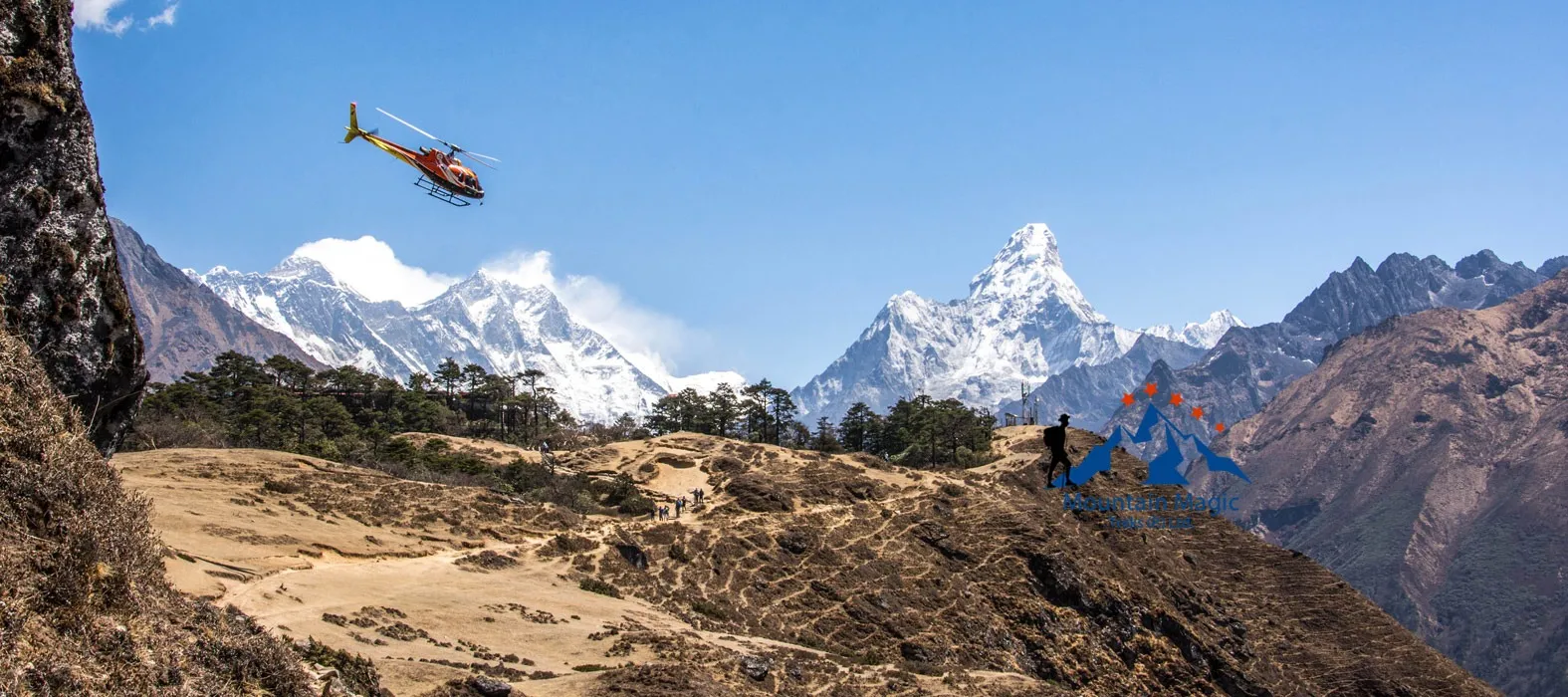
An Everest trek is not one long walk through the same landscape. The scenery keeps changing as you gain altitude.
One day you may walk beside a river under green hills. A few days later, you may be crossing a rocky trail surrounded by glaciers and giant peaks.
The Everest Base Camp Trek With Helicopter Return is built around this change. You walk through the Khumbu region, reach Everest Base Camp and Kala Patthar, and then return by helicopter instead of retracing the full trail. The listed itinerary is 10 days and includes acclimatization in Namche Bazaar and Dingboche.
Your First View of the Khumbu
The trip begins with a helicopter flight from Kathmandu to Lukla. The flight itself offers an early look at the Himalayan landscape.
Once you land at Lukla, the journey changes from flying to walking.
The Trail Starts Gently
The first walking section leads toward Phakding.
Green hills, the Dudh Koshi River, monasteries, and Sherpa settlements appear along the route. The listed walking time is about three hours, making this a useful day to settle into the trek.
Do not rush.
Use the first day to find a comfortable walking rhythm and make sure your shoes and backpack feel right.
Namche Brings the First Challenge
The trail from Phakding to Namche Bazaar takes around six to seven hours.
The route is not difficult all the way, but the final climb toward Namche is a noticeable change from the earlier section.
Take the Acclimatization Day Seriously
Namche is more than a mountain village.
It is the first major place where you spend extra time adjusting to altitude.
The itinerary includes an acclimatization day here. You can explore nearby areas, visit the Everest View Hotel, or walk toward Khumjung and Khunde.
Do not treat this as a wasted day.
Resting and allowing your body to adjust can make the higher sections easier.
Tengboche Shows Another Side
The route continues toward Tengboche, known for its Buddhist monastery and mountain views.
The trail also begins to feel more remote.
Notice the Local Culture
Prayer flags, monasteries, stone walls, and traditional villages become part of the experience.
Take your time around Tengboche.
If you visit the monastery, follow local customs and avoid treating a religious place like a simple photo stop.
The mountains may bring you to the region, but the local culture helps explain why the journey feels different from an ordinary hike.
Dingboche Means Thinner Air
From Tengboche, the trail continues toward Dingboche.
At around 4,410 meters, the altitude is now a serious part of the journey. The itinerary gives another acclimatization day here before you move toward Lobuche.
Slow Down Naturally
You may notice that your walking speed drops.
A climb that looks short on a map can feel much harder than expected.
Do not fight that feeling.
Take smaller steps.
Rest when needed.
Drink water regularly.
During the acclimatization day, the itinerary includes a hike toward Nangkartshang Peak, which reaches about 5,083 meters.
The Green Landscape Starts Disappearing
After Dingboche, the trail becomes more open and rocky.
The thick greenery of the lower valleys is mostly gone.
Look for the Signs of Altitude
The landscape itself tells you that you are climbing higher.
There are fewer trees.
The air feels colder.
Glaciers become more visible.
Huge peaks seem much closer.
Instead of focusing only on how many kilometers remain, pay attention to these changes.
They are part of what makes the Everest route special.
Thukla Gives You a Reason to Pause
The route toward Lobuche passes through Thukla.
Here, memorials honor climbers who lost their lives in the Everest region. The trail then continues toward the Khumbu Glacier.
Respect the Reality of Everest
The mountains are beautiful, but they are not harmless.
Cold, altitude, weather, and difficult terrain can all create real problems.
The memorials are a quiet reminder that preparation matters.
A good trekker knows when to push forward and when to slow down.
Lobuche Brings the Goal Closer
Lobuche sits at around 4,900 meters.
From here, Everest Base Camp is no longer a distant idea.
Save Energy Instead of Chasing Speed
The excitement of getting closer can make you want to walk faster.
That is not useful.
Keep your pace steady.
Eat enough.
Drink regularly.
Take short breaks.
The higher trail rewards patience much more than speed.
The Base Camp Day Is a Long One
The route from Lobuche to Gorakshep, then to Everest Base Camp and back to Gorakshep, is listed as a seven- to nine-hour trekking day.
Everest Base Camp sits at approximately 5,364 meters.
Enjoy the Moment You Arrive
The final approach passes through a high, rocky landscape with glaciers and large mountain views.
When you reach Base Camp, take photographs.
Then put the camera down for a moment.
Look around.
You have walked from green valleys into one of the highest mountain environments on Earth.
That change is the real achievement.
Kala Patthar Offers a Wider View
The next morning brings the climb toward Kala Patthar.
The listed highest point is approximately 5,545 meters.
Sunrise Makes the Effort Worthwhile
The climb begins early, when the air can be very cold.
But the changing light creates a completely different mountain scene.
Everest, Pumori, Lhotse, Nuptse, and nearby glaciers become clearer as the sun rises.
Kala Patthar is not simply another high point.
It gives you a wider view of the landscape you have been walking through for days.
The Return Is Part of the Experience
This is where the Everest Base Camp Trek With Helicopter Return takes a different path from a standard trek.
After the Kala Patthar experience, you return by helicopter rather than walking all the way back.
See the Trail From the Sky
The aerial view can change your understanding of the journey.
The trail that took hours to walk looks tiny.
Villages appear small between enormous valleys.
Rivers become narrow lines.
Glaciers and mountain ridges seem to join together.
The itinerary notes that the helicopter flight from Gorakshep to Kathmandu can take around one and a half hours in clear conditions, although actual timing depends on weather.
Mountain Weather Still Matters
A helicopter return does not mean the schedule is completely fixed.
Mountain weather can change quickly.
Clouds, wind, and visibility may affect flight operations.
Keep Your Plans Flexible
If you have an important flight after returning to Kathmandu, leave enough extra time.
Do not create a schedule where a small delay becomes a major problem.
Flexibility is simply smart planning in the Himalayas.
The Journey Changes Your View
The Everest Base Camp Trek With Helicopter Return is not memorable only because you reach Base Camp.
It is memorable because the landscape keeps changing.
You start with green hills.
Then come rivers and bridges.
Namche introduces higher altitude.
Tengboche brings culture.
Dingboche prepares you for the high mountains.
Lobuche brings glaciers closer.
Base Camp becomes the main goal.
Kala Patthar opens the view.
Finally, the helicopter lets you see the entire region from above.
A Different Way to Finish Everest
Walking gives you time to experience the mountains closely.
You notice the villages, trails, rivers, people, and small details.
The helicopter gives you distance.
It shows how all those places fit together.
That combination is what makes the Everest Base Camp Trek With Helicopter Return different from simply flying over Everest or completing a traditional return trek.
You walk into the mountains slowly.
You experience the high country directly.
Then you leave with one final view from the sky.
That is a fitting end to a journey where the scenery keeps changing from one day to the next.
FAQs
How long is the listed itinerary?
The itinerary is planned for 10 days from arrival to departure in Kathmandu.
Where are the acclimatization days?
Acclimatization days are included in Namche Bazaar and Dingboche.
How high is Everest Base Camp?
The listed elevation is approximately 5,364 meters.
What is the highest point?
Kala Patthar is listed at approximately 5,545 meters.
Is Base Camp reached on foot?
Yes. The itinerary includes trekking to Everest Base Camp before the helicopter return.
Can weather affect the helicopter?
Yes. Weather and visibility can affect the flight, so travelers should keep some flexibility in their plans.
