

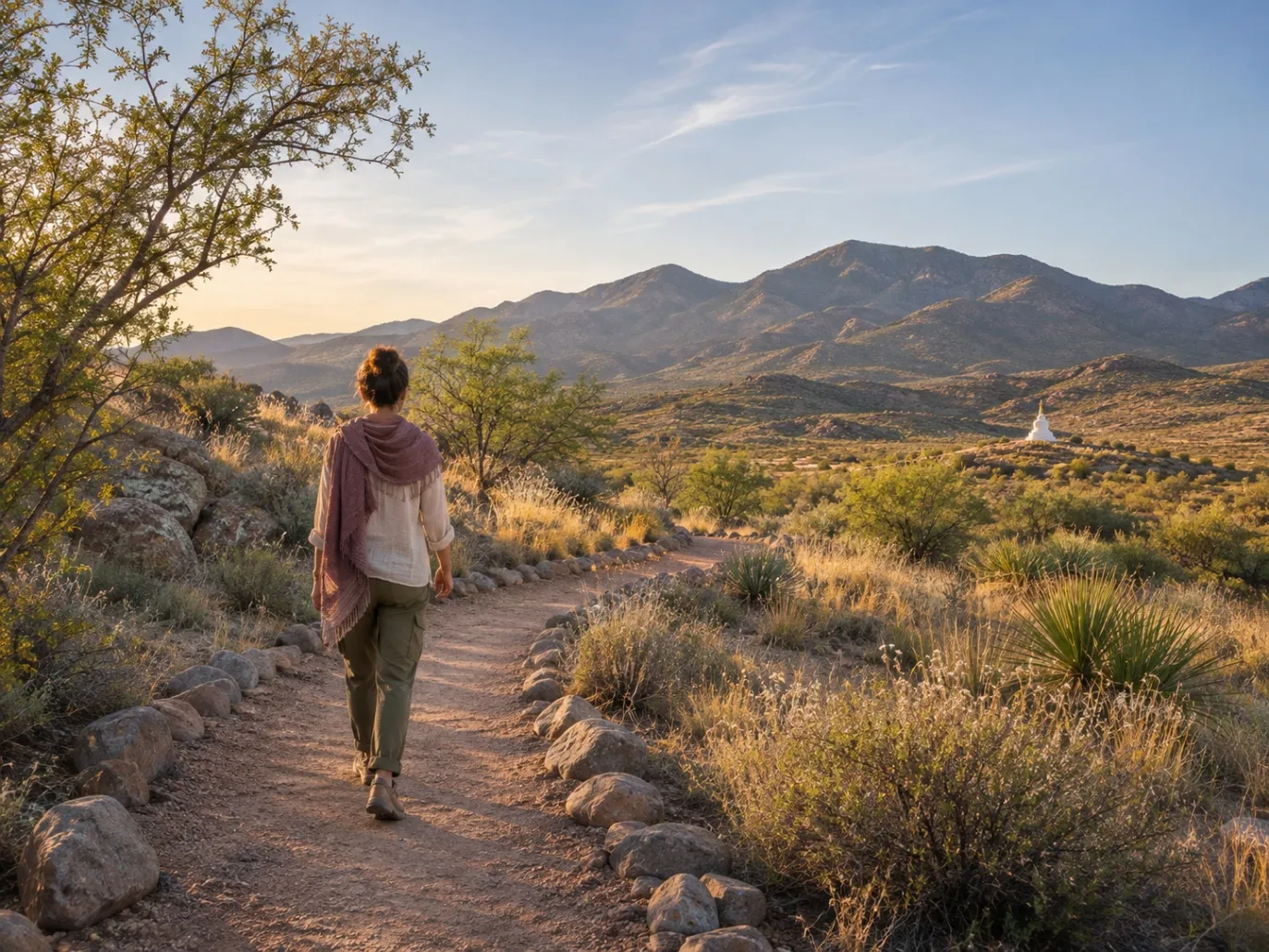
People considering Meditation Retreats in Arizona often imagine long hours of seated silence. Yet deliberate walking offers another way to notice thoughts without immediately following them. At Diamond Mountain Retreat Center in Bowie, the desert surroundings invite attention to movement, landscape, and quiet observation. Its Path of Hope and Healing provides a self-guided walk with contemplative landmarks. Participants need not share one religious outlook to find value in slowing down. The practice can begin with something as ordinary as feeling the ground beneath each step.
Begin With Ordinary Sensory Details
Before setting off, stand still long enough to hear the surrounding sounds. Notice where the feet meet the ground, how air feels against the skin, and whether the shoulders are tense. During the first few minutes, keep attention on these simple sensations instead of searching for a dramatic insight. When the mind starts rehearsing conversations or future responsibilities, return to the next step. This repeated return is the exercise. Familiar sights may become surprisingly detailed when walking is no longer treated as a race.
Let the Landscape Set Pace
Arizona’s desert invites a different kind of attention from the bustle of daily routines. Dry earth, distant mountains, shifting light, and small changes in vegetation become more visible at an unhurried pace. Rather than treating the walk as a fitness target, allow pauses where the view naturally draws interest. Desert conditions still require care: choose suitable footwear, carry drinking water, and follow established paths. Mindfulness does not demand ignoring physical needs. Looking after the body makes it easier to stay present.
Recognize Thoughts Without Following Them
Walking rarely produces an empty mind, nor does it need to. Plans, memories, and worries may surface more clearly once conversation and screens recede. One helpful technique is to name the experience quietly: planning, remembering, judging, or wondering. Then direct attention back toward the sensation of movement. Labels are not verdicts about whether meditation is succeeding. They simply make mental habits easier to recognize. Over time, walkers may discover that a thought can appear without requiring an immediate decision or reaction.
Explore the Meaning of Pilgrimage
Diamond Mountain’s Path of Hope and Healing is described as a 45-minute self-guided walk through the desert. Along the route, visitors can encounter a marble stupa and features connected with spiritual traditions and local heritage. A pilgrimage differs from sightseeing because its purpose involves reflection as much as observation. Still, respect matters more than adopting unfamiliar beliefs. Read available explanations, follow site guidance, and approach sacred features thoughtfully. The route can invite questions about values, responsibility, or what deserves renewed care.
Leave Space for Personal Meaning
Someone searching for a Spiritual Retreat Arizona experience might arrive with questions about loss, change, or direction. Others simply want a quieter relationship with everyday life. Diamond Mountain welcomes both Buddhist practitioners and secular visitors, allowing different interpretations of reflective time. A meaningful walk therefore does not need a prescribed emotional result. One person may appreciate the landscape; another may notice the tendency to rush. Resist comparing experiences with other visitors. The useful observation is whatever can be noticed sincerely, without forcing a conclusion.
Follow Movement With Stillness
After walking, find a suitable place to sit quietly, whether back at a retreat cottage or another appropriate resting spot. Allow the breathing to settle without trying to reproduce a special feeling from the trail. A short note about what stood out may be more useful than pages of interpretation. Consider whether attention was easier while moving, sitting, or alternating between both. Such comparisons can help shape future practice. They also show that contemplation can continue after the walking itself has ended.
Carry Small Observations Into Life
Retreat insight becomes more practical when translated into an ordinary habit. Choose a short walk near home and practice noticing footsteps before reaching for a phone. On the way to work, use a few moments outdoors to recognize tension or impatience. These modest exercises are more sustainable than trying to recreate an entire desert retreat. What matters is continuity of attention, not a matching landscape. Even in busy surroundings, a familiar pause can reconnect movement with deliberate awareness and more considered responses.
Conclusion
A reflective walk does not promise instant clarity, but it can create room to notice what normally goes overlooked. Desert paths, moments of silence, and respectful encounters with spiritual landmarks offer different entry points into that process. Diamondmountain.org introduces visitors to the Path of Hope and Healing and the center’s broader individual retreat setting. Explore its guidance before visiting, then approach the experience with curiosity rather than a checklist. The most worthwhile discovery may be a small, repeatable way of paying attention.
